Sale of elephant ivory objects : the applicable regulation
Since the 1970s, the trade in ivory objects, in particular those derived from elephants, has been subject to increasingly strict regulation. The legitimate objective is to combat poaching and trafficking. The result is a complex regulatory framework in which prohibition is the rule, and authorization, the exception.
A recent decision of the Orléans Administrative Court illustrates the difficult interpretation of the rules applicable to the trade in ivory objects, and the impractical consequences for dealers (TA Orléans, 3 April 2025, 1st chamber, no. 2301544).
THE CURRENT REGULATION ON THE TRADE IN IVORY OBJECTS
Entered into force on 1st January 1975, the Convention on International Trade in Endangered Species of Wild Fauna and Flora (“CITES”) established the legal framework for the trade in ivory objects. This convention aims to protect endangered animal and plant species, notably by restricting their circulation and trade. It introduces measures to verify the legality, traceability and sustainability of trade in these species.
Although CITES is binding only on signatory countries, most of its provisions have been incorporated into European regulations, subsequently transposed into French law (Regulations No. 338/97 of 9 December 1996 and No. 865/2006 of 4 May 2006; Environmental Code, Articles R. 412-1 to R. 412-7; Decree of 16 August 2016 relating to the prohibition of the trade in elephant ivory and rhinoceros horn within the national territory).
The principle is the prohibition of purchasing, offering to purchase, displaying for commercial purposes, selling or holding for sale specimens of the most endangered species, among which the elephant is included (Annex A of European Regulation 338/97)¹.
However, several exemptions are provided, in particular for:
i. Ivory objects acquired or imported into the territory of the European Union before the entry into force of trade restrictions – i.e. 1975 for Asian elephants and 1990 for the African elephant (Article 8.3(a) of Regulation No. 338/97). The “date of acquisition” is understood as “the date on which a specimen was taken from the wild or, if that date is not known, any subsequent probative date on which a person first took possession of it”. These goods must be subject to the issuance of an intra-Community certificate (“ICC”);
ii. “Antiques”, i.e. worked objects dating prior to June 1947²: the antiquity of the specimens must be established by their holder by any means of expertise.
In France, between 2016 and the end of 2021, exemptions were granted for the trade in elephant ivory objects, depending on their nature, date of manufacture, proportion of ivory, etc. For some, a purely declaratory procedure was sufficient.
However, since January 2022, the declaratory procedure is no longer sufficient for the sale of such objects – regardless of their dating and the quantity of ivory³. Any sale of objects containing elephant ivory must now be subject to the issuance of an ICC by the Regional Directorate for the Environment, Planning and Housing (“DREAL”), prior to the sale (Regulation No. 865/2006, Article 62(3)).
Nevertheless, the Orléans Administrative Court did not align itself with this strict interpretation.
THE PRAGMATIC POSITION OF THE ADMINISTRATIVE COURT
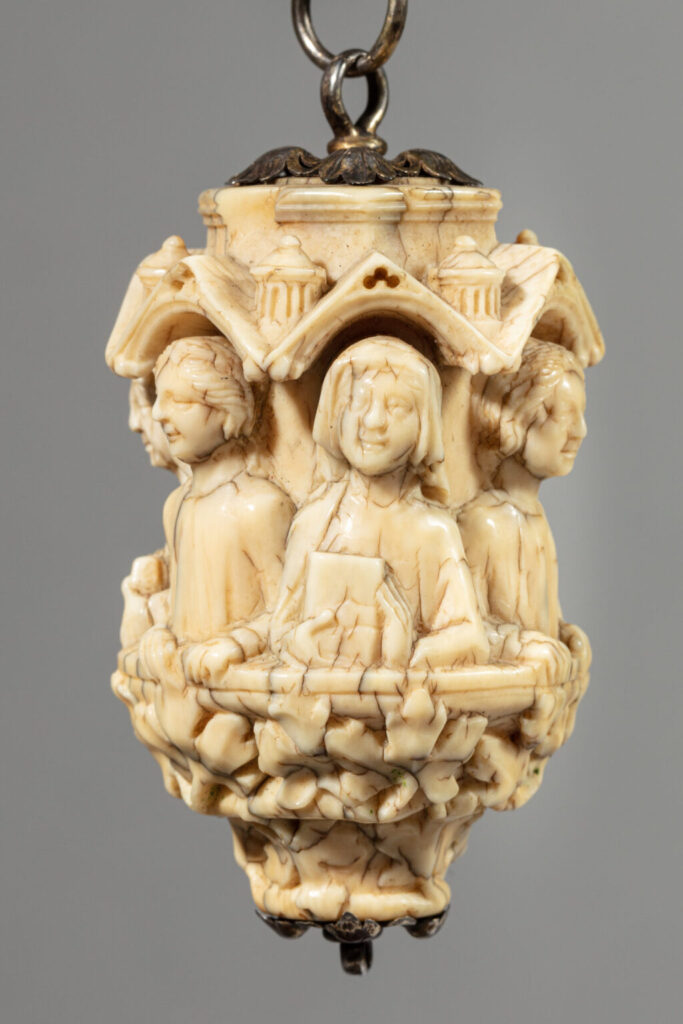
On 15 October 2022, a dealer purchased a rosary bead at auction. The object, carved in African elephant ivory, depicts six figures under Gothic arches. After the sale, an expert report established that the object dates from the 14th century. With a view to its resale, the dealer applied for the issuance of an intra-Community certificate.
The DREAL refused, relying on the absence of proof of the lawful origin of the object. It also argued that its acquisition in October 2022, without prior issuance of an ICC, was unlawful. The owner of the object referred the matter to the administrative judge and sought annulment of this decision. He considered that the object dates from the 14th century, and that the ivory was therefore “taken from the wild” before the entry into force of the Regulation, justifying the issuance of the ICC.
The Administrative Court followed his reasoning and held that the refusal decision was vitiated by a manifest error of assessment. It notably found that the antiquity of the object corresponded to the exemption provided for the trade in “worked specimens” acquired before the entry into force of the Regulation, and was eligible for the exemption applicable to antiques. In doing so, the Administrative Court did not sanction the sale without a certificate in October 2022 – whereas this formality has been mandatory since January 2022.
It may be thought that the court did not wish to penalise the dealer’s commercial activity, given that the absence of a prior ICC application resulted from a failure by the auction house. This solution, pragmatic in light of the market and the objectives of the regulations, could nevertheless be subject to appeal.
CONCLUSION
Ultimately, this pragmatic judgment may remain a case-specific decision, closely linked to the particular circumstances of the case: the exceptional antiquity of the object, the good faith of the dealer, and the failure of the auction house.
Above all, this decision does not exempt art market owners and professionals from complying with the applicable regulations in order to secure the marketing of ivory objects. Before any sale, it is necessary to (i) gather, as far as possible, complete documentation establishing its provenance and dating, and (ii) apply for the issuance of an intra-Community certificate from the territorially competent DREAL.
These requirements may appear overly burdensome for very old and common objects (crucifixes, Dieppe ivories, netsukes, etc.) which furnish European homes. In practice, the processing of such certificate applications mobilises numerous civil servants, whereas the declaratory procedure allowed for random checks that were less constraining for all stakeholders involved.
Will this abundance of checks imposed on the art market and the administration save the elephants? One may doubt it.
Article published in L’Objet d’art

Attorney & Partner
odebaecque@debaecque-avocats.com
Tél. + 33 (0) 1 53 29 90 00